Shut-Eye: When the Trick Starts Working on You
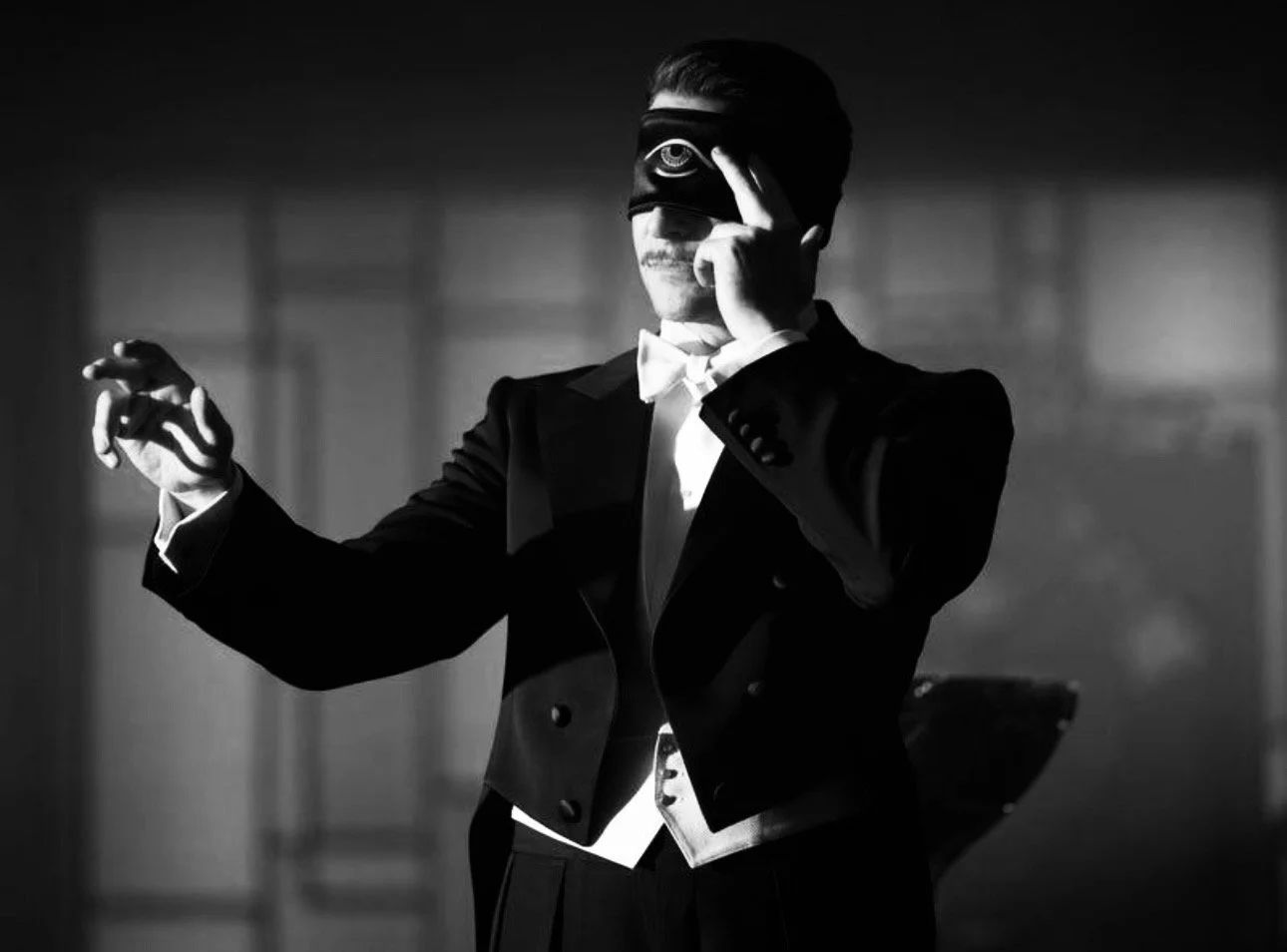
Bradley Cooper as the mentalist Stanton Carlisle in “Nightmare Alley” (2021)
There used to be a term among fortune tellers and mentalists for the moment when the performer started believing their own performance: shut-eye. You knew the techniques and you knew how the effect was produced, but after enough successful readings, enough startled faces and enough people asking how the hell you knew that, something could begin to shift. Maybe the technique wasn’t really responsible anymore. Maybe you actually had the power.
That was shut-eye, and I think tarot readers are particularly vulnerable to it.
Not because tarot makes people gullible or because every reader secretly wants to be psychic. The problem is much simpler than that. Being good at tarot is flattering. When a reading lands with ridiculous accuracy, the temptation isn’t only to think, That was a good reading. Eventually another question sneaks in: What does that say about me?
That is where vanity enters the room.
When Being Good Feels Like Proof
I’ve had readings where the cards came together so neatly that I’ve laughed. A strange combination appears at exactly the right moment, or a few cards seem to describe a situation with much more specificity than they reasonably should. Sometimes the person sitting across from me goes quiet and looks at me like I’ve reached into some private part of their life and pulled something out.
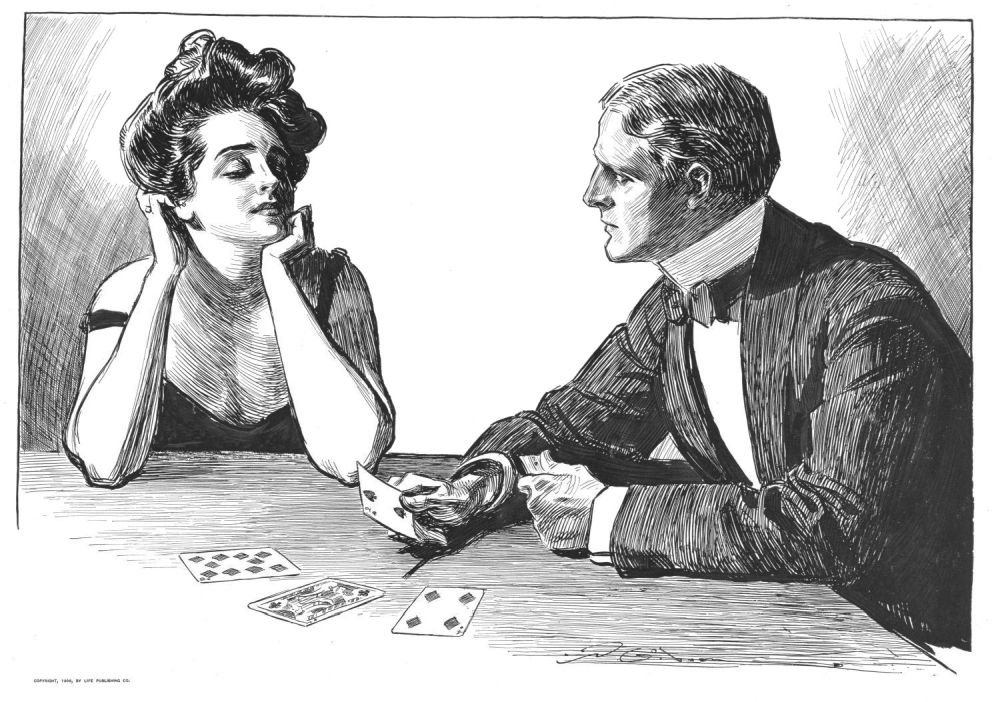
“Of Course You Can Tell Fortunes with Cards” illustration by Charles Dana Gibson (1900)
It feels good when that happens. I’m not going to pretend otherwise.
If you read tarot for long enough, people will tell you that you’re intuitive. They’ll tell you that you see things other people don’t or that there must be something going on beyond the cards themselves. Hear that often enough and it becomes very easy to start wondering whether they might be right.
The problem isn’t confidence. Reading cards well is an actual skill and getting better at something should make you more confident in your ability to do it. The trouble begins when competence starts turning into a theory about who you are.
A good reading becomes proof that you are unusually intuitive. A strange coincidence starts to feel like confirmation that there is something different about you. Eventually you’re no longer talking about what happened in the reading. You’re talking about what the reading supposedly reveals about you, the reader.
That is where I think the old idea of shut-eye gets interesting.
No Bloodline Required
I also think this is where tarot picks up a lot of unnecessary mythology.
There is no reason to assume that a good fortune teller has to come from some special lineage, have a grandmother who read cards at the kitchen table or possess an innate psychic ability that the rest of us were simply born without. Those stories are romantic and sometimes they are genuinely part of a person’s family history, but they are not a requirement.
Tarot can be learned.
You can learn the cards, learn how they interact, learn how to notice what matters and learn how to communicate what you see. You can get better at all of those things with practice. Some people will take to it faster than others, just as they do with music, writing, cooking or anything else but that is very different from saying the ability is bestowed on a chosen few.
I think that distinction matters because the idea of an inherited gift feeds exactly the kind of vanity I’m talking about. If I believe I’m good at tarot because something special was placed inside me at birth, then every successful reading becomes another little confirmation of that story.
If I believe I’m good because I have spent years doing it, then the whole thing becomes much less mystical and, frankly, much more useful.
Skill can be studied. Skill can improve. Skill can also get sloppy if you stop paying attention.
A gift, on the other hand, is awfully convenient.
Becoming Your Own Mark
A mark doesn’t usually fall for a con because they are stupid. They fall for it because the story being offered gives them something they already want. The con finds a desire and gives that desire a believable shape.
Fortune tellers have desires too.
We want to be good at what we do, obviously, but there can be another desire hiding underneath that one. We want our successes to mean something about us. It is much more exciting to believe that a reading landed because you possess some unusual faculty than because you have spent years becoming good at reading cards.
Tarot is remarkably good at feeding that story back to the reader. The seeker gasps. A prediction apparently comes true. A combination appears that seems impossibly appropriate. After a while, the whole thing can begin to feel less like skill and more like confirmation.
Vanity provides a very convenient explanation: you.
That, to me, is what becoming your own mark looks like. The person across the table may be buying a reading, but the reader is being sold something too. They are being sold a story about themselves, and because they are also the person telling the story, they know exactly what the customer wants to hear.
You aren’t merely good at this. You’re special.
That is a very seductive pitch.
The Gift That Can Never Be Wrong
Once you begin believing that you possess some exceptional ability, it can become surprisingly difficult to be wrong.
If you tell somebody something and they immediately recognize it, that reinforces the belief. But if they don’t recognize it, there are endless ways of protecting the belief anyway. Maybe they haven’t understood the message yet. Maybe circumstances changed. Perhaps the cards were describing something more subtle than either of you realized at the time.
Any one of those things could conceivably be true. The problem begins when the possibility that you were simply wrong disappears altogether.
At that point you have built a system in which success strengthens your confidence and failure can no longer challenge it. That may be comforting, but it is useless if you are actually interested in getting better at what you do.
I prefer keeping the possibility of being wrong around.
Being wrong gives you something to examine. Maybe you forced the cards into a story you liked better, ignored something obvious or simply missed. None of those possibilities is particularly glamorous, but all of them are more useful than turning every failure into another reason why your powers remain intact.
A system that never allows you to be wrong will eventually convince you that you are extraordinary and tarot readers should probably be suspicious of anything that flattering.
Mystery Doesn’t Belong to Me
This does not mean I think every strange reading needs to be explained away. I’ve had plenty that still puzzle me. Sometimes cards describe something with a precision that I don’t know what to do with and sometimes a coincidence is weird enough that I’m perfectly happy calling it weird.
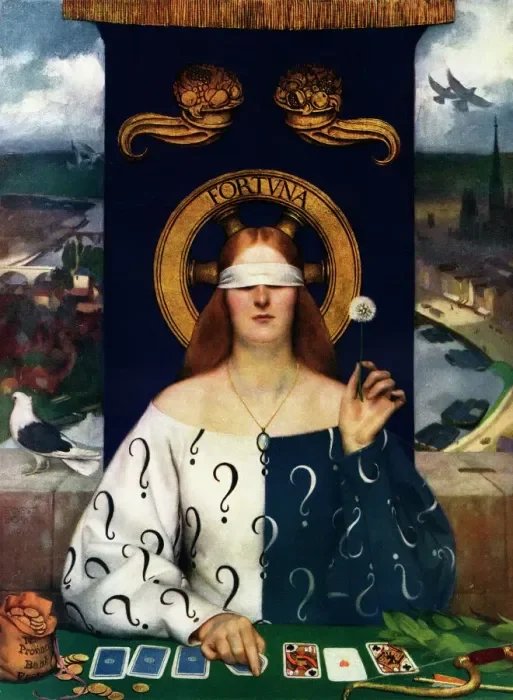
Fortuna, 1911, by Ernest Board
What I’ve become wary of is the leap from I don’t know why that happened to therefore there must be something remarkable about me.
That leap is enormous, and it just happens to land in exactly the place vanity would most like us to end up.
I don’t think mystery is a problem. I think claiming ownership of the mystery is.
There may be things happening in a reading that I don’t completely understand. Some of it is probably pattern recognition, experience and the strange intimacy created when two people concentrate on the same set of images. There may be other factors I don’t have a good explanation for and I’m comfortable leaving it there.
The cards can surprise me without the surprise becoming a statement about my own importance. Something can remain unexplained without me needing to stand in the middle of the explanation.
Keeping the Eye Open
I think this is why the idea of shut-eye has stuck with me. It isn’t really a warning against believing in tarot. I don’t think belief is the interesting part. What interests me is how easily a reader can start using the success of the reading as evidence about themselves.
That seems like a very human thing to do. If people keep telling you that you have a gift, and every so often the cards do something genuinely uncanny, it would almost be stranger if the idea never crossed your mind. I certainly understand the appeal of it.
I just don’t trust the appeal.
The discipline, for me, is not to keep the eye open for some hidden explanation. It is to keep it open to my own motives. Am I describing what the cards suggest, or am I quietly arranging them into a story that makes me feel gifted? Am I listening to the person in front of me, or waiting for the moment when their reaction confirms the image I have of myself? Am I treating an accurate reading as evidence of practice and attention, or as evidence that I am different from other people?
Those questions are less exciting than believing in a gift. They are also harder to answer, because they leave me with responsibility instead of glamour. If a reading works, I can credit preparation, experience, observation and luck. If it fails, I can look at what I missed. Neither explanation makes me special, but both give me something real to work with.
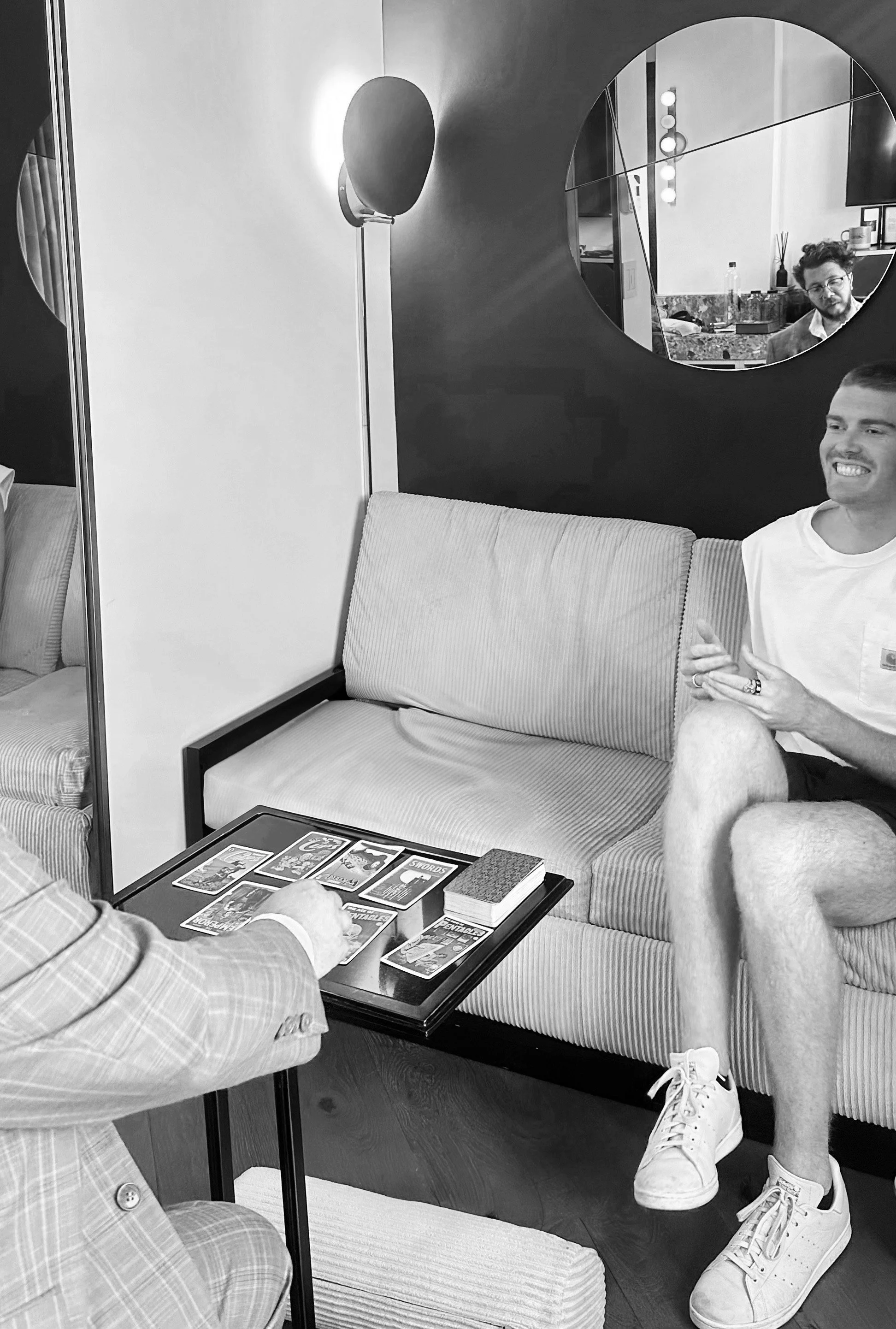
There are readings I still can’t explain particularly well, and I’m fine with that. Maybe I noticed something without realizing it. Maybe the cards happened to arrange themselves into an absurdly good sentence. Maybe there is something else going on that I don’t understand. None of those possibilities requires me to decide that I’m the remarkable part of the equation.
That is probably the bit of vanity I’m most interested in guarding against. Not the obvious kind, where someone tells everyone how powerful or psychic they are, but the quieter temptation to look at a strange thing that happened and make yourself the reason it happened.
The eye has to stay open in both directions. It has to remain open to the mystery, but also to the possibility that I am using the mystery to flatter myself. Otherwise curiosity becomes self-importance, and humility becomes another performance: the fortune-teller who claims not to know while privately treating every coincidence as proof.
I’d rather leave some of it unexplained.
Because the danger of shut-eye isn’t really that you start believing in tarot too much. It’s that you start using tarot to believe too much in yourself. Once every uncanny reading becomes proof of your own exceptional nature, the cards aren’t the thing fooling you anymore. You’ve simply become your own best customer.
