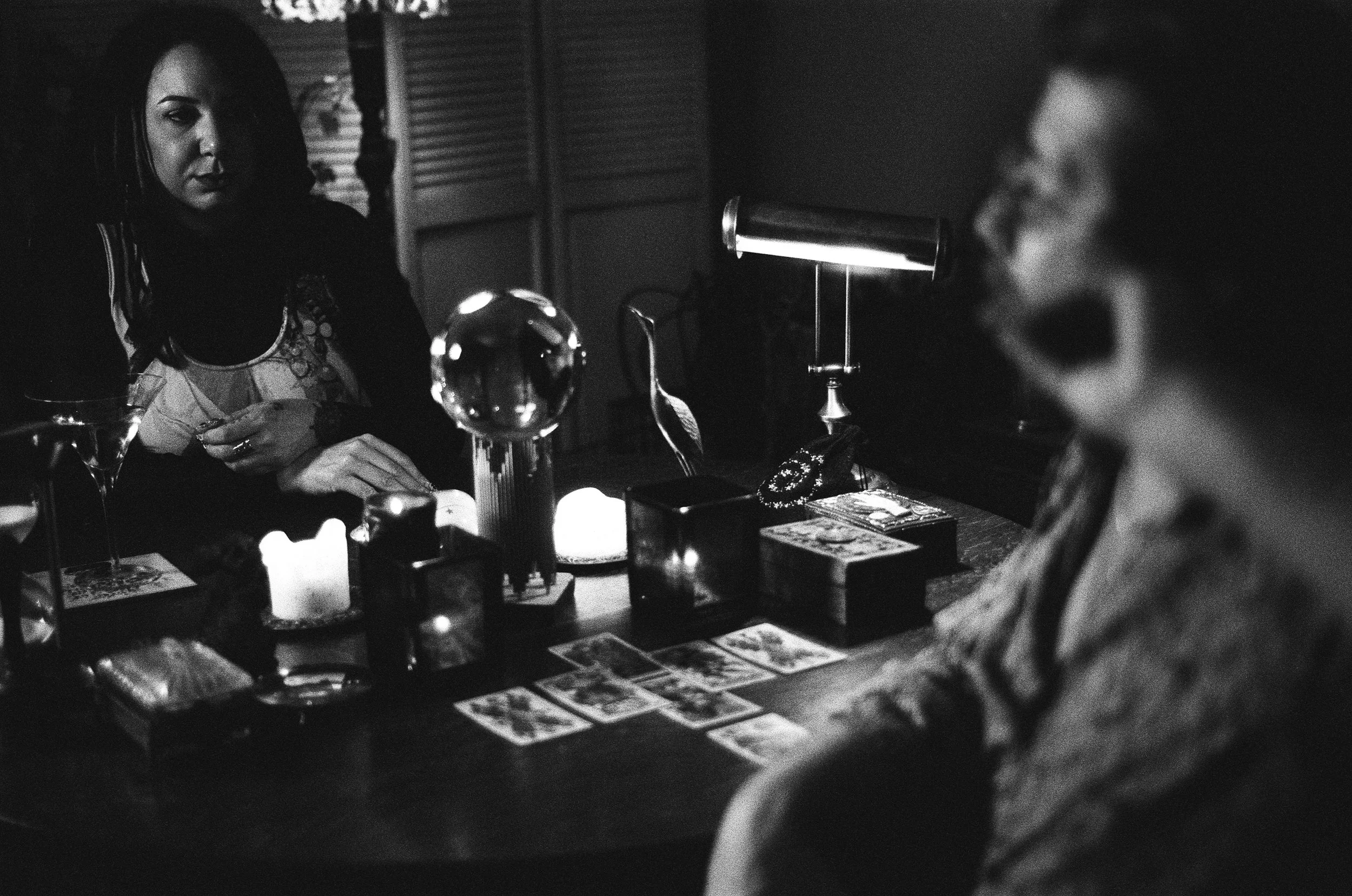
In 1796, a French manual on cartomancy offered its readers a rather interesting proposition. If women learned to tell their own fortunes, they would no longer need to consult the unscrupulous professionals who made a living taking advantage of them. The book, L’Art de tirer les cartes, presented instruction in divination as a sort of public service. By teaching people to interpret playing cards for themselves, it would presumably put a few dishonest fortune-tellers out of business.
I sorta like this idea. There’s something amusing about a manual devoted to teaching fortune-telling that also warns its readers against the people who practice it professionally.
More than two centuries later, we’re still having essentially the same argument.
I’ve been thinking about this while researching laws prohibiting fortune-telling and attempts to establish ethical standards among practitioners. Is there such a thing as a traditional fortune teller’s code of ethics? And if so, what exactly would it require? One might expect a profession with such a colorful history of charlatanism to have developed some fairly robust ideas about professional conduct. Instead, the subject often becomes entangled with the question of whether fortune telling is legitimate in the first place.
Someone can be perfectly sincere about their abilities while behaving in ways I would consider thoroughly unethical. Yet certain laws still treat fortune telling itself as a criminal offense.
Rogues, Vagabonds and Other Suspicious Characters
The suspicion surrounding fortune-tellers is considerably older than the modern occult community.
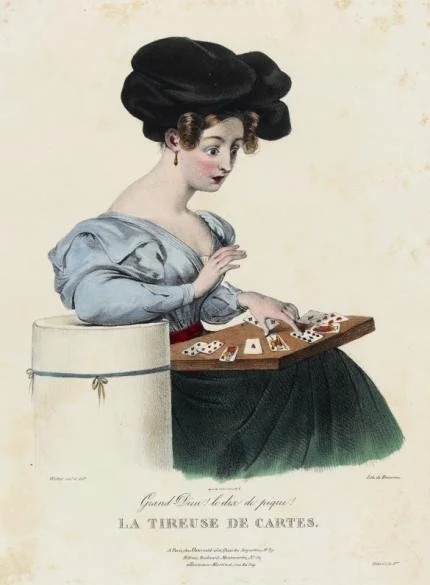
Émile Charles Wattier - 19th Century
Throughout much of European history, divination occupied an uncomfortable position in the eyes of religious authorities. The problem wasn’t always that practitioners were considered dishonest. At various points, the concern was that their abilities might be genuine, and that consulting supernatural powers outside the sanctioned religious establishment was itself dangerous.
As attitudes toward witchcraft changed, so did the justification for prosecuting fortune-tellers. Rather than accusing someone of possessing forbidden powers, authorities could accuse them of pretending to possess powers that didn’t exist.
In Britain, the Vagrancy Act of 1824 classified certain fortune-telling practices among the activities of “rogues and vagabonds,” particularly when employed to deceive others.
The legislation was part of a broader attempt to control itinerant livelihoods and people considered socially undesirable. Fortune-telling was associated with communities already subjected to discrimination, particularly Romani people, and offered some women opportunities to earn money outside conventional employment. The law ostensibly concerned itself with deception, although deciding which fortune tellers deserved prosecution was often another matter.
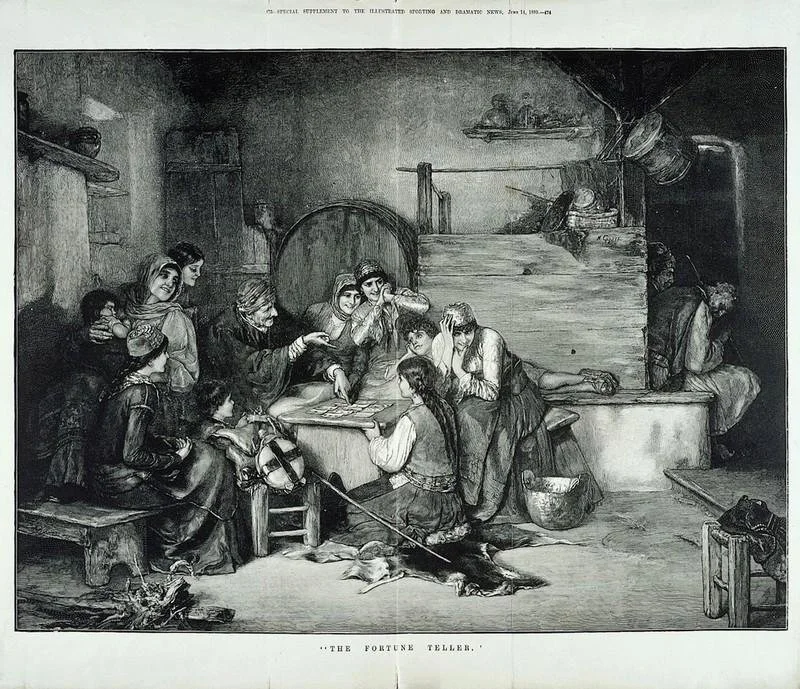
The Fortune-Teller - Nikolaos Gysis - 1889
In May 1911, the British House of Commons entertained a rather pointed question from MP Cathcart Wason, who wanted to know why poor fortune-tellers were being prosecuted while their fashionable counterparts were free to advertise throughout London’s West End. Six days later, Wason returned to the subject, questioning Home Secretary Winston Churchill about the unequal application of the law. Churchill maintained that prosecution required evidence of an intention to deceive, and that the police were primarily concerned with protecting people vulnerable to exploitation.
Wason wasn’t satisfied. He suggested that questionable conduct taking place behind curtains and accompanied by soft music was hardly less objectionable than the same conduct performed openly. Churchill declined to venture an opinion on the finer points of the comparison.
Apparently, a fortune-teller operating from a fashionable establishment could command a degree of legitimacy that someone practicing the same trade under less respectable circumstances could not.
Pretending for Gain or Lucre
In October 2023, Hanover, Pennsylvania’s police chief, Chad Martin, paid a visit to The Serpent’s Key Shoppe and Sanctuary after the business was featured in a local publication. The article mentioned that proprietor Beck Ravenswood offered tarot readings, which was apparently enough to attract the attention of law enforcement.
Martin informed Ravenswood that charging customers for fortune-telling could violate Pennsylvania law. According to Ravenswood, he warned that the police could return and take action if they received complaints about further readings. Martin subsequently maintained that the visit was merely informational, rather than a threat of arrest.
When I asked Ravenswood whether anyone had actually accused them of fraud, their response was emphatic.
“There was never an allegation that I had deceived a customer! There was never an official complaint filed with the police, or investigation officially opened.”

Beck Ravenswood, proprietor of the Serpent’s Key Shoppe and Sanctuary
It turns out Pennsylvania has a law prohibiting certain forms of paid fortune-telling, a legal relic whose origins can be traced to legislation enacted in 1861. The current statute, Section 7104, describes the offense using the rather splendid expression “pretends for gain or lucre.”
Among other things, it prohibits making certain claims about predicting future events through cards and includes an impressive inventory of supernatural services involving spells and other occult interventions. It even concerns itself with locating buried treasure, a service I’ve never seen advertised but would be tempted to pay for.
The encounter eventually prompted Ravenswood to file a federal lawsuit challenging the constitutionality of the law.
What interests me particularly is the statute’s use of the word pretends. What exactly does it mean to pretend to tell a fortune?
I put that question to Ravenswood, who responded:
“I’m not ‘pretending’ to read cards, I AM performing a tarot reading.”
They also pointed out that people who don’t believe tarot is a legitimate practice might consider every reading a pretense, depending on their own religious convictions.
A tarot reading takes place regardless of whether the customer, the reader or the local police chief believes the cards possess predictive power. The cards are interpreted and the customer receives the service they’ve paid for. Whether the predictions are accurate is another matter entirely. If the law is going to treat someone as a criminal, I would hope it could offer something more substantial than a philosophical disagreement over whether divination works.
When I asked Ravenswood what had surprised them most about the public response to their case, they mentioned the support they’d received from people who didn’t necessarily share their beliefs.
One response they’d heard repeatedly was particularly telling:
“I don’t really agree with anything that y’all do here, but I respect your right to do it since it’s not hurting anyone.”
Ravenswood’s lawsuit is still proceeding. In July 2026, a federal judge denied an effort to dismiss the case, allowing the constitutional challenge to continue. Meanwhile, Pennsylvania House Bill 1562, introduced in 2025, proposes repealing the prohibition altogether. Ravenswood told me that repeal would accomplish what they hoped to achieve through litigation, although the bill was laid on the table in September 2025.
Learning the Hustle
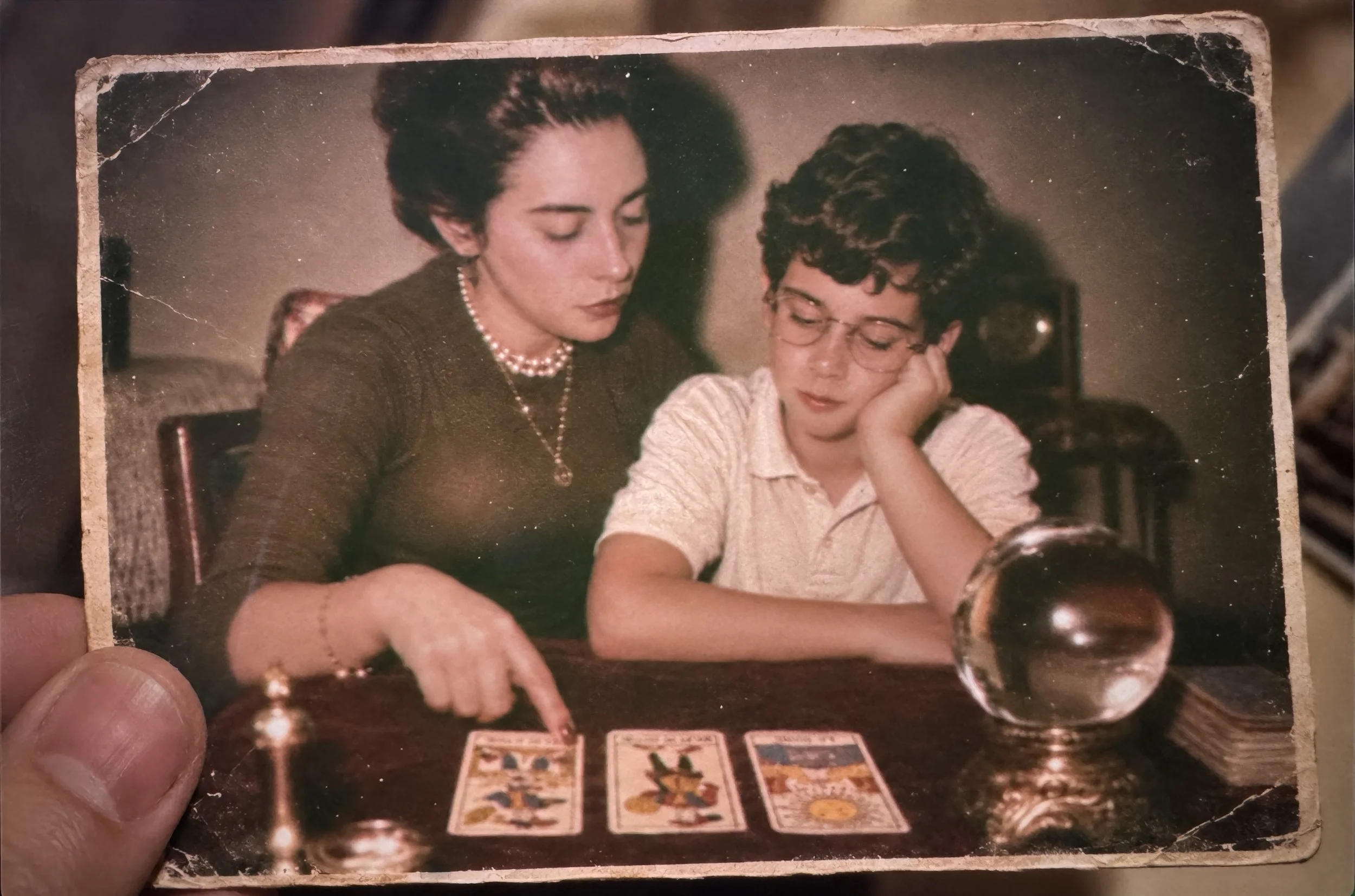
My interest in the ethics of fortune telling isn’t entirely academic. I learned to read cards when I was young in a hair salon that also told fortunes.
The salon was a neighborhood gathering place, particularly for women. People came to have their hair done and inevitably started talking. Anyone who’s spent much time in a salon knows how much people are willing to confide in their hairstylists. Hairdressing and fortune telling, as it turns out, are remarkably complementary professions.
Customers could retire to a back room for a reading while having their hair set. I was fascinated by the whole business, particularly the ability of these hairstylists to reduce grown women to tears. My reaction was essentially:
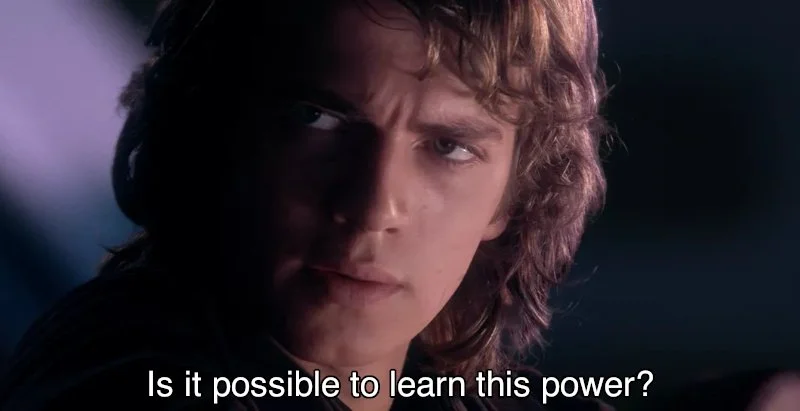
The adults thought my enthusiasm was amusing, so they taught me to read cards. I took to it rather well. It wasn’t exactly the mystical apprenticeship one might imagine. Fortune-telling was presented to me as a skill and, quite frequently, a hustle. Some of the people who taught me engaged in outright fraud.
Customers without strong ties to the community, particularly those who weren’t regulars, could be identified as marks. They might be convinced that they were suffering under a curse or that the reader possessed some extraordinary insight into their circumstances. The objective was to extract as much money from them as possible.
That was part of my education, too.
I learned that the very qualities that make someone an effective fortune-teller can also make them an effective scammer.
I’ve spent much of my life practicing and studying divination, and I have no interest in dismissing the craft because of the dishonesty I’ve witnessed. But I’m equally unwilling to defend unscrupulous practitioners simply because we happen to share a profession.
A Code of Conduct
There have been attempts to establish formal ethical standards for tarot readers. The American Tarot Association, for example, has published a code addressing confidentiality, honest representation of qualifications and the importance of referring clients to appropriate professionals when questions fall outside the reader’s expertise.
These are perfectly reasonable provisions, although I have mixed feelings about establishing some sort of professional authority over cartomancy. People have been learning to read cards through personal study and practice for centuries. I don’t see why someone should require an expensive certificate from a self-appointed organization to be considered qualified. I have even less patience for those who insist that proficiency requires some special inherited ability. Anyone can learn tarot. Becoming good at it requires practice. But the absence of formal qualifications doesn’t excuse a lack of professional responsibility.
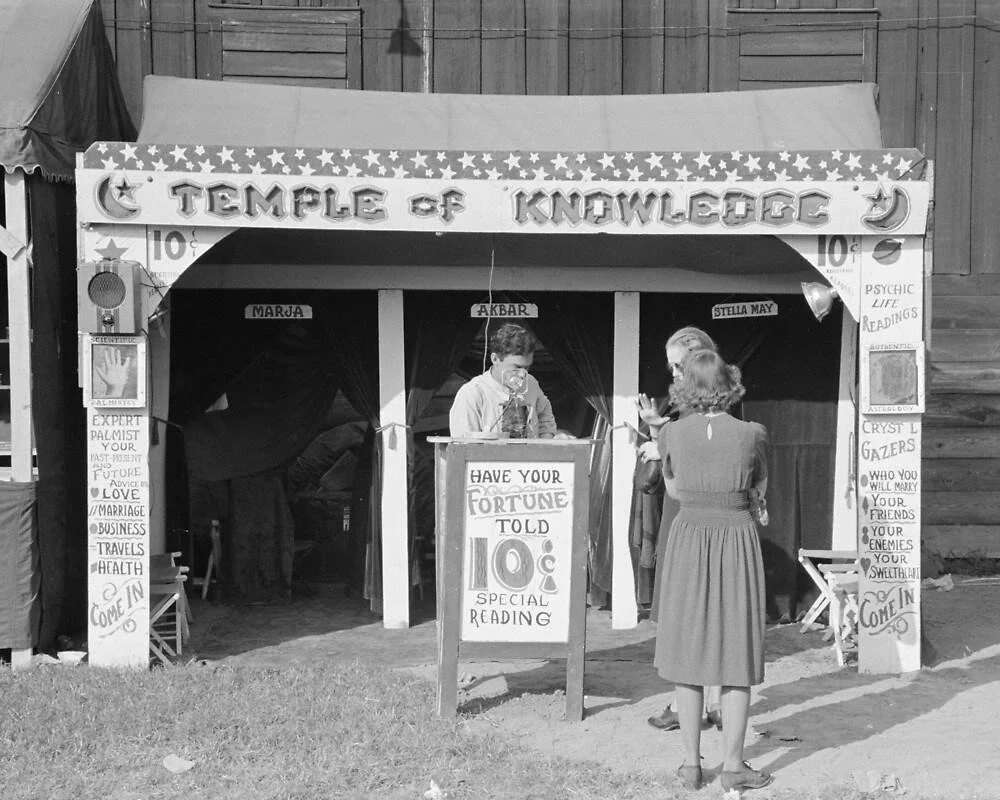
At a minimum, customers deserve to know what they’re purchasing and how much it will cost. Their confidences should remain confidential. A reader shouldn’t pretend to possess medical or legal expertise, and ought to recognize when a customer would be better served by a qualified professional.
More troubling is the potential for financial exploitation.
A fortune-teller who invents a curse and then offers to remove it for a substantial fee is committing a swindle, or a bujo, to use an old industry term. A fortune-teller who encourages someone to return for endless consultations, particularly when that customer has become frightened or dependent upon the service, has reason to question their own motives.
Exploitation isn’t always so calculated. A practitioner might sincerely believe they’re helping someone by recommending additional readings. That doesn’t necessarily make the arrangement healthy or responsible.
I also think honesty requires a willingness to deliver an unfavorable reading.
Arthur Edward Waite’s The Pictorial Key to the Tarot, first published in 1910, contains plenty of unpleasant interpretations. Ruin, disappointment and misfortune are hardly foreign to the cards. Yet contemporary tarot culture sometimes seems determined to transform every unfortunate prediction into an encouraging message about personal growth.
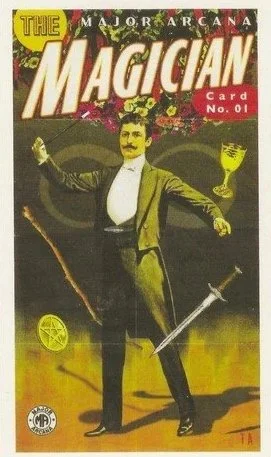
The Magician - T. Alcott, The Pulp Tarot
There’s nothing inherently unethical about telling someone something they don’t want to hear. The responsibility lies in communicating it with judgment, without presenting speculation as certainty or frightening someone into purchasing further services.
Then there’s informed consent.
One of the peculiar consequences of fortune-telling laws is the widespread practice of describing readings as entertainment. New York law, for example, specifically exempts performances conducted solely for entertainment or amusement.
The Serpent’s Key displayed disclaimers describing readings as entertainment, although that didn’t prevent the police from questioning the legality of the business.
I asked Ravenswood whether those disclaimers reflected how they understood their practice or were primarily a legal precaution.
Their response was:
“My disclaimers are a little of both. I firmly believe in informed consent, and want folks to understand the experience they’re signing up for, while also protecting myself legally as much as I can.”
I appreciate that answer. Customers should understand the nature of the service they’re receiving, whatever the reader’s personal beliefs about divination. A disclaimer, however, doesn’t excuse dishonest conduct once the consultation begins.
I would like to see more discussion of professional ethics that treats fortune telling as a craft, with responsibilities toward the people who pay for it. If we want the profession to be taken seriously, we ought to acknowledge its abuses and hold ourselves accountable for them.
That seems considerably more useful than another argument over whether the cards really work.
Sources & Further Reading
L’Art de tirer les cartes, ou Le moyen de lire dans l’avenir (1796). Paris: Deroy. Bibliothèque nationale de France, catalog record.
Pooley, William G. (2023). “Paper Tools for Broken Hearts: Fortune-Telling with Cards in France, c. 1803–1937.” French History, 37(4), 379–400. Read the study.
Vagrancy Act 1824, Section IV. Original legislation.
UK Parliament, House of Commons Debates (1911). “Fortune Telling,” May 9, and “Fortune Telling Prosecutions,” May 15. May 9 debate | May 15 debate.
Stewart, Sara (October 18, 2024). “Is an End to Pa.’s 163-Year Ban on Fortune Telling in the Cards?” Spotlight PA. Read the report.
Pennsylvania General Assembly. Title 18, Section 7104, “Fortune Telling.” Statutory text.
Rios v. Martin, Civil No. 1:24-CV-01399, U.S. District Court for the Middle District of Pennsylvania. Memorandum, August 28, 2025. Read the court document.
Pennsylvania House Bill 1562 (2025–2026). Proposed repeal of Section 7104. Legislative record and bill status.
Tabb, Asia (July 18, 2026). “Pennsylvania Tarot Reading Lawsuit Advances After Judge Denies Motion to Dismiss.” WITF. Read the report.
Waite, Arthur Edward (1910). The Pictorial Key to the Tarot. London: William Rider & Son. Read the public-domain text.
American Tarot Association (2014). “Code of Ethics.” Spring Quarterly Journal, p. 26. Read the code.
New York State Senate. Penal Law, Section 165.35, “Fortune Telling.” Statutory text.
Original Interview
Ravenswood, Beck. Email interview conducted by Drew Clark, October 23–November 3, 2026. Ravenswood is the proprietor of The Serpent’s Key Shoppe and Sanctuary in Hanover, Pennsylvania. Quotations are reproduced from their written responses.
