
Sanyu Estelle, https://www.sanyuestelle.com
In 2021, a client of tarot reader Sanyu Estelle paid $500 for a reading. What arrived was a fifteen-minute video of a burning candle. The client hadn’t purchased the service from Estelle at all. Someone had created an Instagram account impersonating her and used it to solicit money from her followers. Estelle, whose real name is Sanyu Nagenda, didn’t even offer a $500 reading.
She was hardly alone. Across social media, impostors were copying the photographs and biographies of professional fortune-tellers, astrologers and psychics. They contacted followers privately, offering readings or claiming to have urgent spiritual messages. Some customers paid and received nothing. Others received something resembling a reading, only to discover afterward that the person they thought they’d hired had never been involved.
For the genuine practitioners, the damage went beyond lost business. Their reputations were being used to deceive people, and customers sometimes blamed them for services they had never provided. There is a peculiar irony here. Fortune-telling has been accused of being fraudulent for centuries. Now people who earn their living telling fortunes are having to warn the public about scammers pretending to be them. Someone deceived by a fake fortune-teller may find that the first question people ask is why they were consulting a fortune-teller in the first place.
Yet the public’s relationship with divination is considerably more casual than its reputation suggests. In a 2025 report, Pew Research Center found that three in ten American adults consulted astrologers and fortune-tellers at least once a year. Most did so primarily for fun. Only one percent said they relied heavily on these practices when making major life decisions. Plenty of people enjoy having their fortunes told without arranging their lives around the results. That doesn’t make for a particularly scandalous headline, though.
The Witches of New York
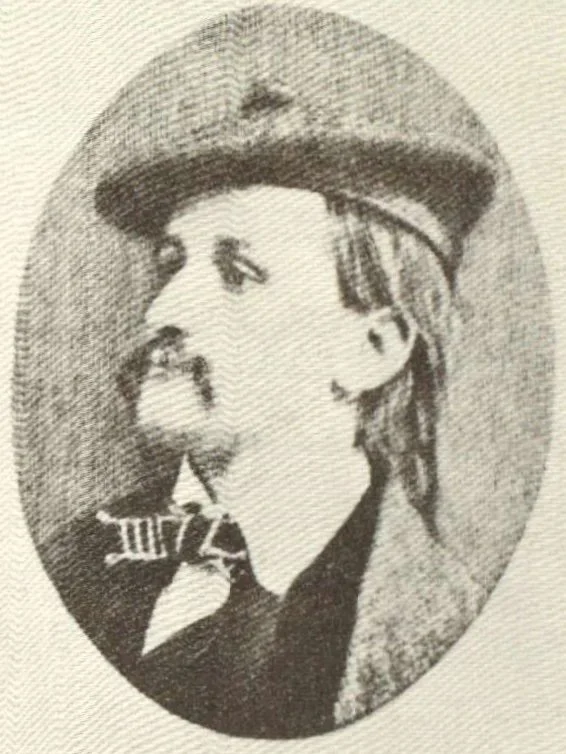
Mortimer Thomson a.k.a Q. K. Philander Doesticks, Humorist and journalist
In 1857, journalist Mortimer Thomson went looking for fortune-tellers to expose. Writing under the rather extravagant nom de plume Q. K. Philander Doesticks, P.B., he published a series of articles in the New-York Tribune, collected the following year as The Witches of New York. His premise was simple enough: fortune-tellers were frauds and their customers were fools.
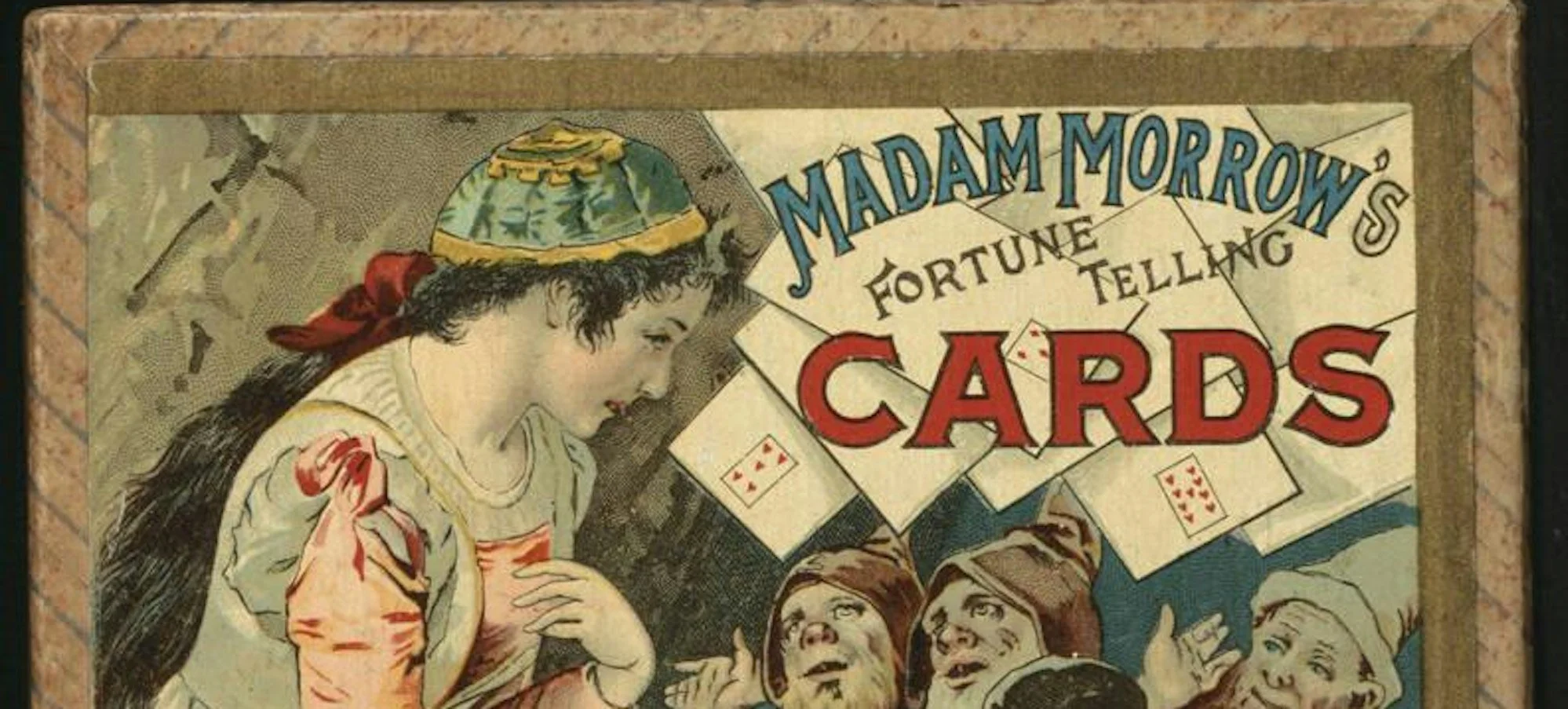
Thomson wasn’t above a little deception himself. One of his subjects, Madame Morrow, operated out of 76 Broome Street and refused to see male customers. Rather than take no for an answer, Thomson disguised himself as a woman and got his reading. He later suggested that Morrow excluded men because women were easier to deceive, though he offered no evidence for this explanation.
Apparently, deception was a perfectly respectable investigative technique when Thomson was the one employing it. Morrow had established a rule about whom she would see. Thomson ignored it, then turned the encounter into an exposé of her dishonesty.
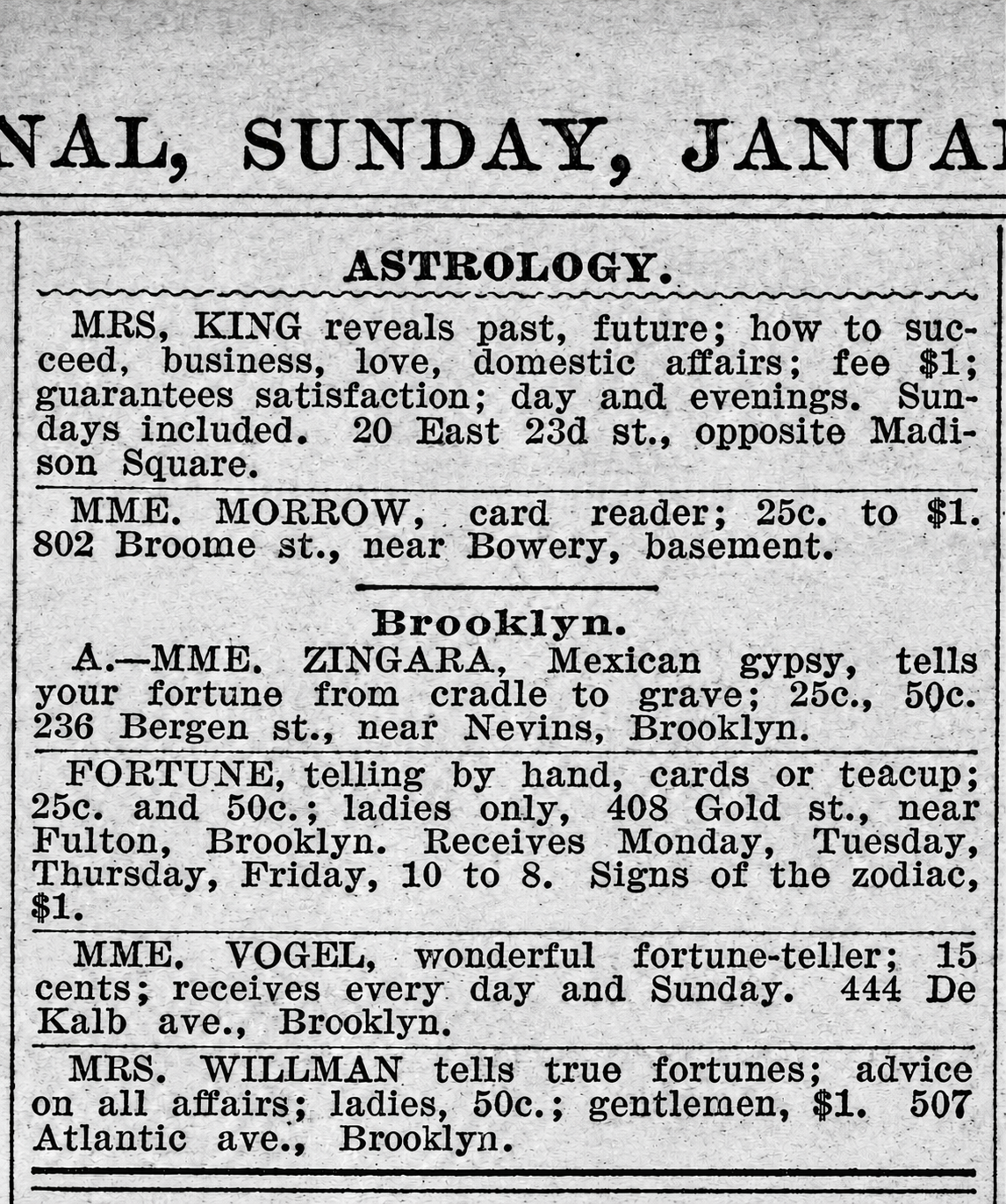
Fortune-teller ads published in The New York Tribune (1857)
In Mortimer and the Witches, historian Marie Carter looks beyond Thomson’s caricatures to examine the lives of the women he visited. They weren’t simply comic characters waiting to be exposed. They made their living telling fortunes, maintained reputations and attracted customers who sought them out.
Thomson approached these encounters as contests in which he’d already declared himself the winner. But he wasn’t the only person capable of putting on an act, and he showed little interest in the people sitting across from his subjects. What did those customers think they were getting for their money? How much did they believe and how much were they willing to question?
Those are way more interesting questions than whether Thomson managed to fool a fortune-teller.
The Social Game

There is a tendency to describe a fortune-telling session as though the reader does all the work and the customer simply sits there absorbing predictions. Anyone who has spent much time reading for strangers knows that it rarely works that way.
In his study of French cartomancy between 1803 and 1937, historian William G. Pooley found customers who, even then, challenged predictions, argued over fees and sometimes approached readings as a bit of amusement. In one case from 1905, an unhappy customer fetched a policeman after receiving an unsatisfactory reading. The officer made the fortune-teller return her money. Not exactly the helpless victim of an all-powerful mystic.
Pooley also recounts the story of a man who dismissed card reading as nonsense but was later seen weeping after consulting a practitioner named Meuvray. Whatever happened during that session, his skepticism apparently didn’t prevent him from being affected by it. I find these encounters more interesting than the usual arguments over whether fortune-telling actually works.
A reading is a social exchange and both people have a part to play. The fortune-teller interprets the cards, but also pays attention to the person sitting across the table. Meanwhile, the customer is sizing up the reader. Does this person know what they’re doing? Are they paying attention? Is any of this worth the money? There is a game being played here, although that doesn’t necessarily mean anyone is trying to cheat.
The cards establish the rules of engagement. They provide something for the reader to interpret and something for the customer to respond to. A prediction may lead to another question. The customer might disagree with an interpretation or recognize something the reader hadn’t considered. Sometimes a reading takes an unexpected turn.
Belief isn’t always the point, either. Someone can be skeptical about fortune-telling and still find themselves interested in what the cards have to say. A person who approaches one reading as entertainment might seek genuine reassurance from another. And the things people want to know aren’t necessarily frivolous.

Marriage appears frequently in historical accounts, particularly those involving young women. It’s easy to laugh at someone asking whether she’ll marry her sweetheart, but marriage could determine a woman’s financial security and social standing. Men’s questions about business and money were more readily treated as serious concerns. Yet a man asking whether an investment would succeed was also trying to get a glimpse of an uncertain future.
For some customers, a reading provided an opportunity to discuss something they might have difficulty approaching directly. Rather than immediately confessing a worry, they could ask what the cards showed and see where the conversation went. This is one of the things I enjoy about reading tarot. The cards give two people a shared language for discussing matters that might otherwise be awkward to bring up. The reader doesn’t necessarily know where the conversation is going, and neither does the customer.
That doesn’t mean every encounter is harmless. A dishonest practitioner can exploit the relationship, particularly when a customer is frightened or desperate. But assuming that every reader is a predator and every customer a fool doesn’t tell us much about the ordinary business of fortune-telling.
The Foolish Customer

If fortune-tellers have spent centuries being accused of dishonesty, their customers have faced another accusation: that they should have known better.
It’s an easy judgment to make after the fact. Consider the Instagram impersonation cases. Many of the people contacted by impostors already followed the practitioners whose identities were being stolen. They were familiar with their work and believed they were communicating with someone they knew. The fraud depended upon that familiarity.
The customer who paid someone impersonating Sanyu Estelle wasn’t necessarily fooled into believing that a burning candle could reveal the future. They were deceived about whom they were hiring. When fortune-telling is involved, it's tempting to dismiss the customer rather than examine how the deception worked. The same attitude appears in historical reporting. Customers become convenient examples of public ignorance rather than people making decisions about how to spend their money.
There are dishonest fortune-tellers, certainly. There are also people who explain what they offer, charge an agreed fee and provide the service their customers requested. For those practitioners, reputation matters enormously. The hustlers copying social media accounts understand something about the business. People aren’t necessarily paying for access to supernatural knowledge in the abstract. They’re paying to consult someone specific.
In 1857, Mortimer Thomson disguised himself to gain admission to Madame Morrow’s consulting room. More than a century and a half later, impostors are disguising themselves as fortune-tellers to gain access to their customers. The motives are different, but both depend upon misrepresenting who is on the other side of the exchange.
For all the attention paid to whether fortune-tellers can be trusted, remarkably little is paid to the trust their customers place in them, or to the judgments those customers make for themselves.
Sources
Contemporary reporting and research
Los Angeles Times. “Astrologers, psychics are being impersonated on Instagram.” November 30, 2021. https://www.latimes.com/california/story/2021-11-30/astrologers-psychics-are-being-impersonated-on-instagram
Heather Greene. “Instagram smash-and-grab: Impostors peddle fake psychic and tarot readings.” Religion News Service, December 20, 2021. https://religionnews.com/2021/12/20/instagram-smash-and-grab-impostors-peddle-fake-psychic-and-tarot-readings/
Pew Research Center. “3 in 10 Americans Consult Astrology, Tarot Cards or Fortune Tellers.” May 21, 2025.
https://www.pewresearch.org/religion/2025/05/21/3-in-10-americans-consult-astrology-tarot-cards-or-fortune-tellers/
Historical sources
Mortimer Thomson, writing as Q. K. Philander Doesticks, P.B. The Witches of New York. 1858. Primary account of the fortune-tellers Thomson visited, including Madame Morrow.
https://www.gutenberg.org/ebooks/31717Marie Carter. Mortimer and the Witches: A History of Nineteenth-Century Fortune Tellers. Fordham University Press, 2024. Historical study of Thomson and the women he investigated.
https://fordhampress.com/mortimer-and-the-witches-hb-9781531506247.htmlWilliam G. Pooley. “Paper Tools for Broken Hearts: Fortune-Telling with Cards in France, c. 1803–1937.” French History, vol. 37, no. 4, 2023. Historical analysis of card readers, their customers and the negotiations involved in consultations.
https://academic.oup.com/fh/article/37/4/379/7310795
