SETTING THE TABLE: THE IMPORTANCE OF AESTHETICS AND DESIGN
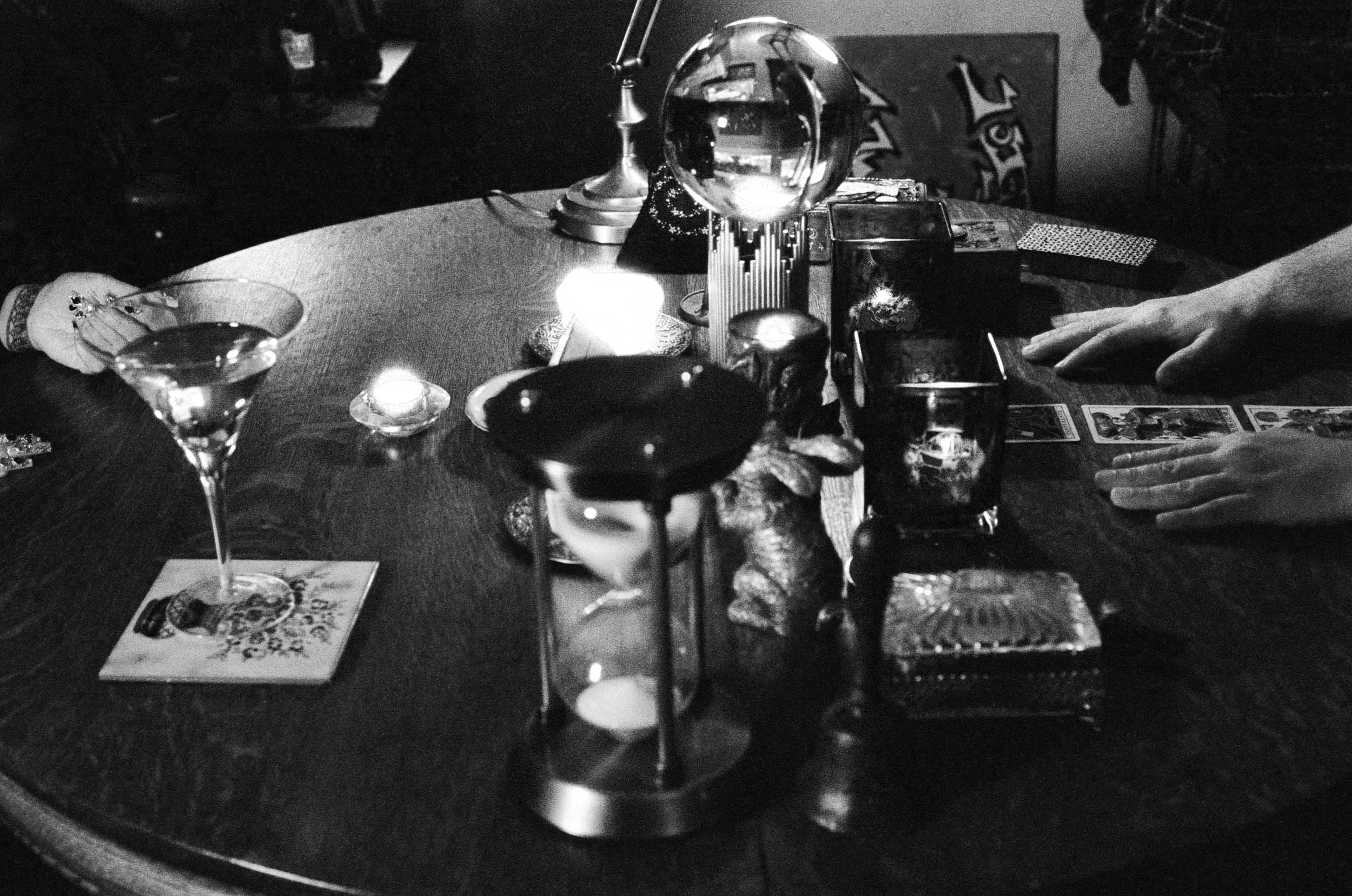
there is more to fortune-telling than jus predicting the future with cards and the suggestive patterns of leaves at the bottoms of dainty tea cups. while the actual divination is the thing that most folks will say that they are after, in truth what people are actually going for is catharsis delivered along with a heavy dose of mood. a big part of the game is aesthetics and if you ain’t got that fortune-teller vibe down it don’t matter how good your card reading skills are, you’ll be punching that ticket for a ride on the struggle bus when it comes to delivering messages that resonate.
i am not saying that you need to put on a whole elaborate stage show but successful fortune-tellers understand the importance of what we call “setting the table.” every public facing role is dependent on setting expectations based on initial impressions and that level of professionalism in bearing and environment colors how seriously people will take the interaction. in this article, i will explain the methodology behind decorating your fortune-telling space and how to create an evocative design story that will give your practice that air of mystery that people expect when looking for mystical guidance.
INSIDE VS OUTSIDE
one of the goals of good interior design is to create a psychological separation between the outside and the inside. the outside world tends to be one of societal rules and regulations that limit our agency for the safety of the populace while the inner world of dwellings, places of worship and businesses reflect the vibe and intentions of individuals who have claimed that space for a specific purpose. when one walks into a cathedral a person’s behavior changes even if they do not belong to that particular religion. this isn’t necessarily because of respect for holy places or societal expectations. it is due to the design choices and decor of the cathedral which conveys this unspoken behavioral expectation. the same holds true for any well designed space, from libraries to strip clubs. environmental aesthetics in our built up world is a way to convey meaning without words.
when applied to the art of fortune-telling, this inside vs. outside mindset is a crucial factor when it comes to being a success. there is a certain vibe folks expect when they visit a fortune-teller that combines mystery with an air of shadiness. visiting a seer is seen as a guilty pleasure by many and the idea of doing something that polite society sees as “forbidden” is a big part of the allure. now, i am aware that the new age zeitgeist is all about trying to erase the stigma associated with things like the occult, normalizing “fringe” practices in order to be acceptable to the mainstream, whatever that means. i’ve had plenty of crystal waving reiki wizards criticize me for even calling myself a fortune-teller, claiming that by doing so i was lending credence to the stereotype of carnival performers in smoky, dimly lit tents. my response to these critics is always the same: “so what?”
the allure of this hustle is that it isn’t an accepted part of polite society and the idea that it should be is, in my opinion, a misguided one. “polite society” can be judgemental and their demands on our behavior, oppressive. by stripping one’s practice of these mystical trappings, a fortune-teller erases the sense of otherness that creates a feeling of safety for those seeking guidance. by embracing the fortune-teller aesthetic, you are creating a safe place beyond the judgment of others, which in many cases is the root of a seeker’s anxiety.
now, i am not saying that you have to go full caricature with your design. all crystal balls and astrological symbols painted on the walls and what not. however, when setting up your fortune telling space it is important to create a sense of environmental intention that dovetails with your brand. if your brand revolves around celtic paganism, for example, decorating your space with green man imagery and props that evoke fairy faith and the proto-irish cycle of the seasons would be ideal. since aesthetics like this are rarely overt in our day to day lives, jus walking into a space so decorated puts a person in the mental place to connect with the fortune-teller and the messages that they are delivering.
PROPS AND THE ART OF CURATED DISTRACTION
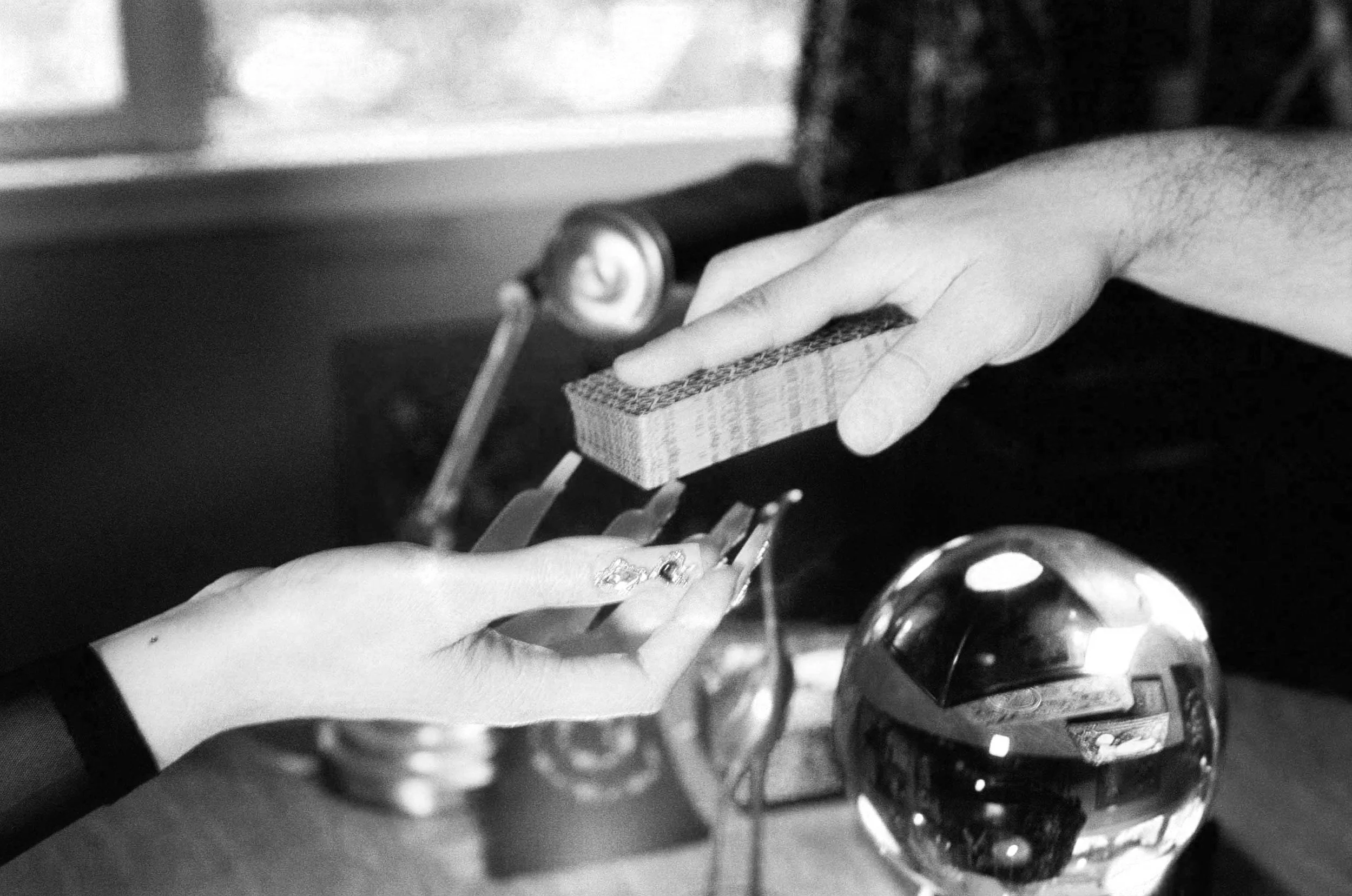
a seeker’s emotional reticence is one of the biggest hurdles that a fortune-teller has to overcome when it comes to delivering an effective fortune. breaking through this self-imposed “block” can be daunting at first, especially if the querent isn’t really forthcoming with all of the issues that led them to seek out a fortune-teller in the first place. while an argument can be made that a good fortune-teller can overcome this through divination alone, it can be hard to find the right path if one doesn’t have a map of the situation. a lot of time will be wasted trying to ken the specific problems that a seeker has if they are being tight-lipped about their issues.
my teacher had a great idiom in regards to solving this conundrum, “when the eyes are distracted the tongue loosens.”
this adage informs the stereotype of the cluttered collection of curiosities that defines a traditional fortune-teller’s aesthetic. crystal balls, mysterious gewgaws and baubles of seemingly arcane significance may seem like random accouterments placed merely for decorative purposes but every knick knack serves a purpose. curious props can confuse the worried mind, the result being the circumventing of the emotional reticence that keeps a seeker from wholly confiding with their fortune-teller.
like with other decor, make sure that the props you display are informed by your brand. choose props that you would be comfortable with your clients handling. by encouraging the seeker to explore your aesthetic in a tactile way, you are encouraging them to connect with your brand in a physical way. a valuable lesson on making friends learned during childhood is sharing one’s toys and extending this knowledge to one’s practice ensures a level of trust between fortune-teller and seeker.
MY CULTURE IS NOT YOUR COSTUME
finally, it is important to stay true to your own lived experience when choosing the story that you are telling with your aesthetics. while it is cool to appreciate and admire the religious and cultural trappings of people outside your own demographic, using them as set dressing and props for your fortune-telling gig is gauche and in poor taste. due to the legacy of colonialism and its exploitation of people around the world, it can be seen as offensive to use items of foreign cultural significance when it comes to decorating your space. although your intentions may be altruistic in doing so, the goal of this hustle is to effectively hold space for others and you can’t do that if you present an environment that is disingenuous or callous when it comes to the perspective of others. and honestly, there is enough shared aesthetics when it comes to fortune-telling that one never really needs to worry about offending anyone by minimizing the art of another culture.
